
AI and Men's Wellbeing: Why Technology Could Be the Key to Getting Men to Talk
 By Femi Ogunmoye · 09 Jun 2026
A Crisis That Demands a New Approach
Three out of four suicides in the UK are men. Men are significantly less likely than women to seek help for mental health concerns. And the gap is even wider among Black and minority ethnic men, where cultural stigma, institutional mistrust, and limited culturally relevant provision create additional barriers.
These are not new statistics. They are a persistent crisis that traditional service models have struggled to address.
So what changes the equation?
The Case for Digital-First Support
For many men, the barrier to seeking help isn't that they don't recognise when something is wrong. It's that the act of seeking help — calling a GP, walking into a counselling service, even telling a friend — carries a social cost that feels too high.
Digital tools lower that cost dramatically. There's no receptionist. No waiting room. No moment where you have to say out loud, to another human, "I'm struggling." There's just a conversation — private, low-stakes, available at the moment you need it.
Research into digital mental health tools consistently shows that men who won't engage with traditional services will engage digitally. The medium matters. The friction matters.
Where AI Fits In
AI wellbeing assistants aren't a replacement for therapy, crisis support, or clinical care. They are, at their best, a culturally accessible on-ramp — a way of beginning a process that can lead somewhere meaningful.
The key is trust and relevance. A generic chatbot built for a corporate wellness programme will not land the same way as a tool built with a specific community in mind — shaped by the language, experience, and context of the men it's meant to serve.
"That's the thinking behind Seniorman Kels."
Kels was built specifically for men in the Seniorman Network community — aged 18–55, many from African and Caribbean backgrounds, many navigating pressures that generic services simply don't account for. The name, the tone, the framing — all of it is deliberate.
We're not trying to build a clinical product. We're trying to build a conversation that feels familiar enough that a man who would never ring a helpline might, just once, type how he's really doing.
And that first step — that one honest message — can change everything.
The Road Ahead
Seniorman Network is one of a growing number of community organisations exploring how AI can serve underrepresented populations in mental health and wellbeing. We believe this is a space that deserves serious investment, careful ethics, and community involvement — not just technical innovation for its own sake.
If you're a health professional, researcher, or organisation interested in this work, we'd welcome the conversation.
Contact us at info@seniorman.co.uk

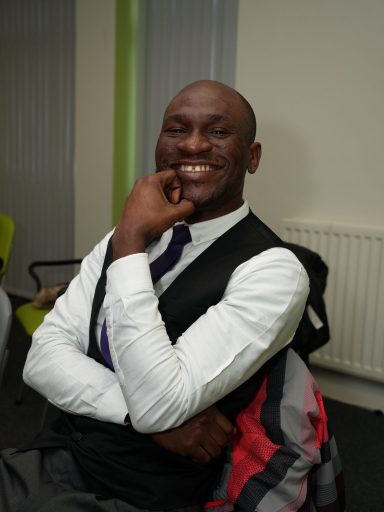 Oluwagbemiga Ogunmoye
  Jide Banwo
  Adeyera Seyi